West by South West: July 2015
July birding in the east, in the heat of summer, not so good. But go west, and it's very birdy, and very hot, especially in Texas, in the heat of summer. But first...
Every year I go to British Columbia for work, and it's not hard to stay for a few extra days. Last year I took the ferry to Victoria, so this year I stayed on the mainland and revisited a few places I've birded before and took in the bird's eye view of the birds from atop a couple of the Greater Vancouver areas highest peaks.


After a brief stop in Toronto, where a chipmunk invaded our living room,
 I was again in the air, flying to Texas to see if I could find four species of bird only seen there, two of which I was not even aware of during my Big Year. Earlier in the Year at the Biggest Week in American Birding, one of the exhibits was about a bird festival, centered around seeing Texas specialties the Golden-cheeked Warbler and the Black-capped Vireo. I decided then and there that I needed to take a trip to Texas in the summer. The other two birds I had previously missed were the Colima Warbler, up in the Chisos Mountains and my Texas nemesis, the White-collared Seedeater.


The next stop was for the Black-capped Vireo. This one was a lot harder to see. I could hear them calling several times during the hour I was there. Another endangered species that has a very limited habitat, I finally caught sight of one in the bushes, as "not" seen in the picture below. The only photograph I got was of the information board nearby. However, it was my second ABA Lifer,(641), of the day, and I still had two more on my wish list.


Every year I go to British Columbia for work, and it's not hard to stay for a few extra days. Last year I took the ferry to Victoria, so this year I stayed on the mainland and revisited a few places I've birded before and took in the bird's eye view of the birds from atop a couple of the Greater Vancouver areas highest peaks.

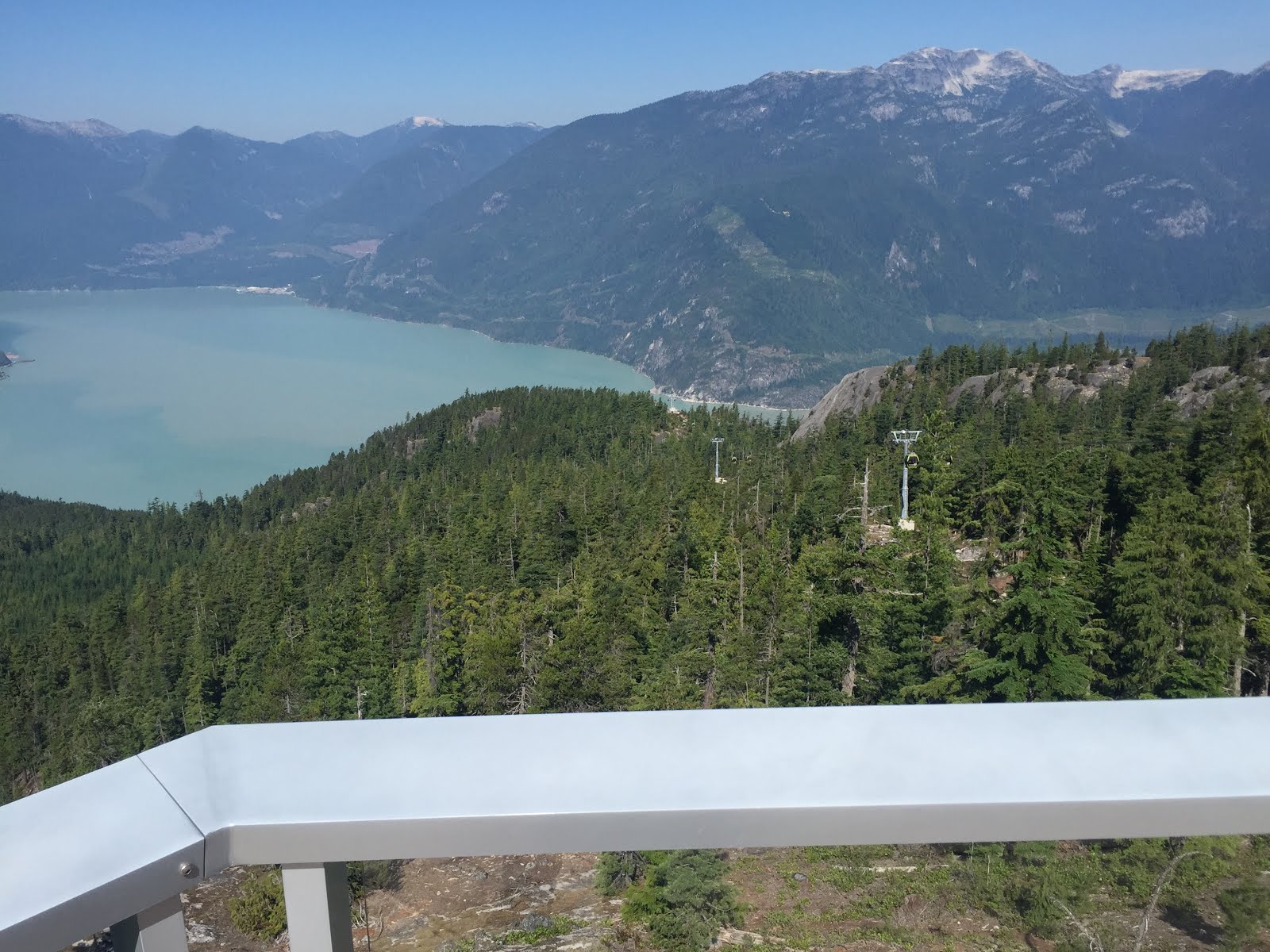

Of course I was really just there for the birds. I found the Chestnut-backed Chickadees, that make our own Black-capped Chickadees look quite plain, Steller's Jay, and Townsend's Warbler. And atop Grouse Mountain I found a family of Sooty Grouse.


After a brief stop in Toronto, where a chipmunk invaded our living room,

The first bird I went for was the Golden-cheeked Warbler, found in The Balcones Canyonlands NWR, from spring until late summer. I was told at the visitors center that it might be a bit late, but at least given directions to the best place to find them, including little painted stones that give you an idea where there nests are. Nothing at stops 1 to 4, but at number five I hit the jackpot, finding 2 and photographing one of them. Number 640 for the ABA List.


At stop 8, I found yet another. Lucky day for me.


The next stop was for the Black-capped Vireo. This one was a lot harder to see. I could hear them calling several times during the hour I was there. Another endangered species that has a very limited habitat, I finally caught sight of one in the bushes, as "not" seen in the picture below. The only photograph I got was of the information board nearby. However, it was my second ABA Lifer,(641), of the day, and I still had two more on my wish list.


Before heading down to Big Bend, I made one more stop at the Balcones Visitor Centre, where I was treated to a flight of Chimney Swifts and a cool home the refuge people had built for them.
I'm going to build one of these:


So, up in the Chisos Mountains is the summer home of the Colima Warbler. I knew I was possibly too late for these birds, but I had found both the warbler and the vireo, so my spirits were high as I began what I figured would be a quick 4 mile trek up the mountain. As seen in the photo below, it did not look so intimidating from the road in.

With in minutes my aching back was killing me, more so than usual, and I hadn't even gone half a mile at that point. It was hot but I was prepared with a large bottle of water and two large cans of Arnold Palmer raspberry lemonade ice teas. I stopped, took some Tylenol and continued. I had figured 4 miles each way, at 4 to 5 miles an hour would get me back as late as mid afternoon. Boy was I wrong. It was hot, it was humid, I was sweating all the way up, thought I'd never make it and when I finally was at the top and had passed every location these Colima Warblers could have been, it was already mid afternoon and I had walked nearly 6 miles by that point. And I still had the trek down the mountain, which was no picnic, I can tell you. The view from the top was spectacular and I did see some nice birds along the way.

A Lucifer Hummingbird was a nice conciliation prize, for my full day in mountains.

Closer to the ground, I made my way to Zapata where I finally saw the White-collared Seedeater, at what was once called the White-collared Seed Eater Preserve, one of only a handful of places you can find this difficult to find bird.
From there I traveled down to the Falcon Dam area and then on to Estero Liano State Park, Sable Palm Sanctuary in Brownsville,(I have not yet visited the "Dump"), and finally made my first visit to Bensten Rio Grande State Park. This is one of the great birding areas in Texas, but not so much in mid July. In the spring they stock the feeders and put out oranges. Long ago birders would trek from around the world just to walk the trailer loop. No trailers anymore but there are still good birds any time of year. I was there for the Cave Swallows, and they didn't disappoint. I also enjoyed Golden-fronted Woodpeckers and good looks at a Groove-billed Ani.


My last stop before heading to the airport in San Antonio was along Highway 100 at Buena Vista Boulevard, where for at least the last 4 years an Aplomado Falcon has sat patiently,(perhaps awaiting a mate that will never come), posing for photos for birders who come from far and wide to get a Lifer.


I'm sure I'll get back to Texas again, especially for a rematch against the Chisos Mountains and that elusive Colima Warbler.


