July 15, 2015 Balcones Canyonlands and the Chisos Mountains:
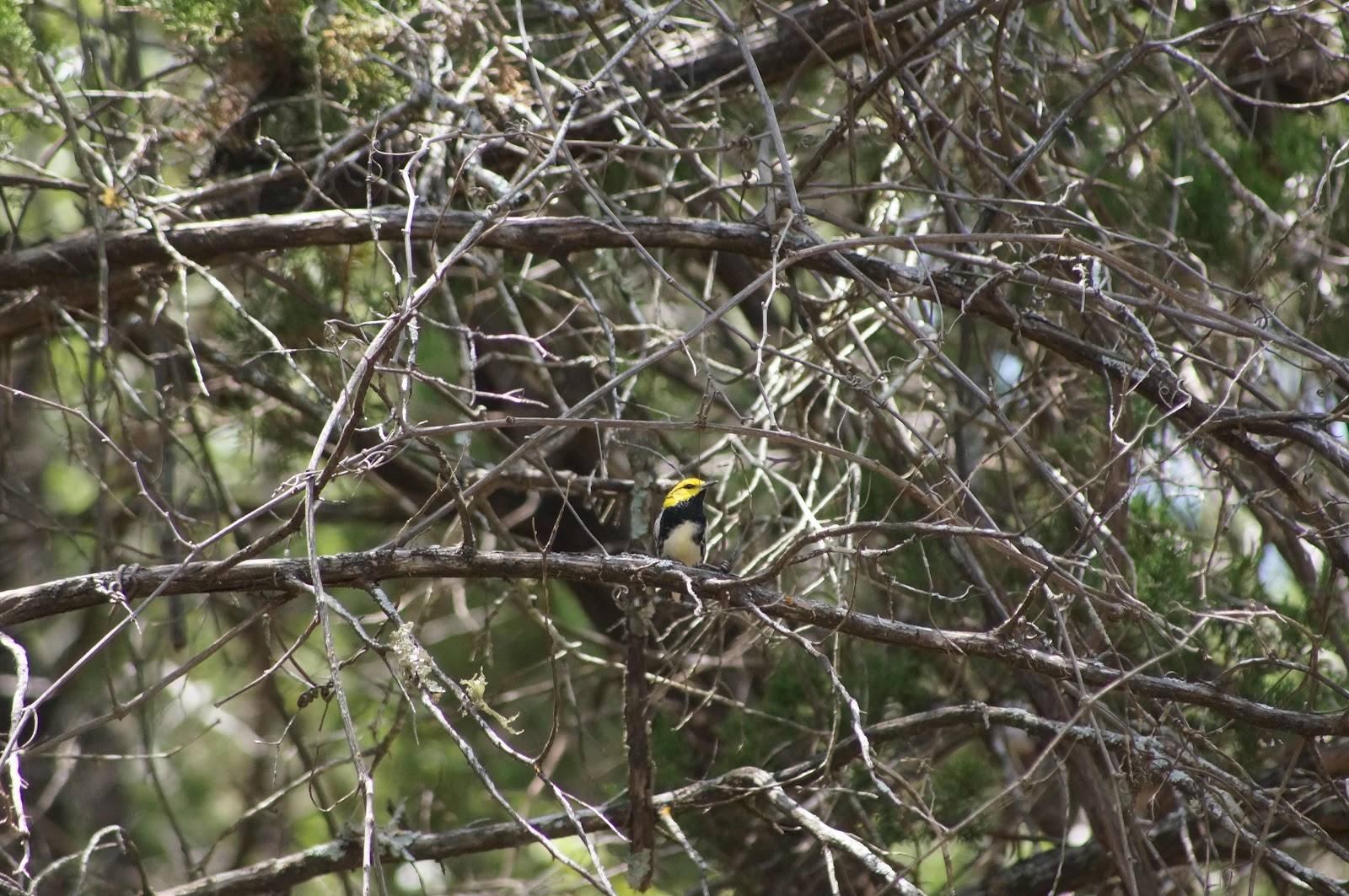
My first trip and attempt for the Colima Warbler came when went to Texas that summer in search of Black-capped Vireo and Golden-cheeked Warbler in addition to the Colima, that I hadn’t known about back in my 2012 Big Year. I got the first two up in Balcones but missed the Colima after the 4 mile hike up to 7000 feet. I had always wanted to go back.
April 15, 2019 In Flight, Toronto to San Antonio:
The last time I hiked this mountain was prior to my last three back surgeries. I knew it was going to be difficult and 20 minutes in I was in severe pain. I rested, took at couple of Tylenol and hiked up and down the 7000 feet over the course of 8 hours in the heat and humidity of Texas in the summer. I didn’t see or even hear a Colima Warbler. To be fair it was late in the season and the odds of seeing one were small. But I had been told the same thing about the Golden-cheeked Warbler and I had found some of them, before wrecking the front end of my rental car on a boulder I didn’t see in front of where I parked. From there I was able to find the Black-capped Vireo, before heading to Big Bend itself.
This year I am still recovering from yet another spinal surgery on October 31 of 2018. But I am strong, relatively pain free when I take a Tylenol or Advil, and have been indoor rock climbing, so I feel strong enough to hike and, this time, find a Colima Warbler or two. I have been told they are singing now until May, and after that they are nesting and harder to find.
April 15, 2019 Driving to Big Bend:
Along the drive I was hoping to pick up a few good Texas species. Instead I found House Sparrows, Red-winged Blackbirds, Black and Turkey Vultures and a Starling.
April 16, 2019 Big Bend National Park:
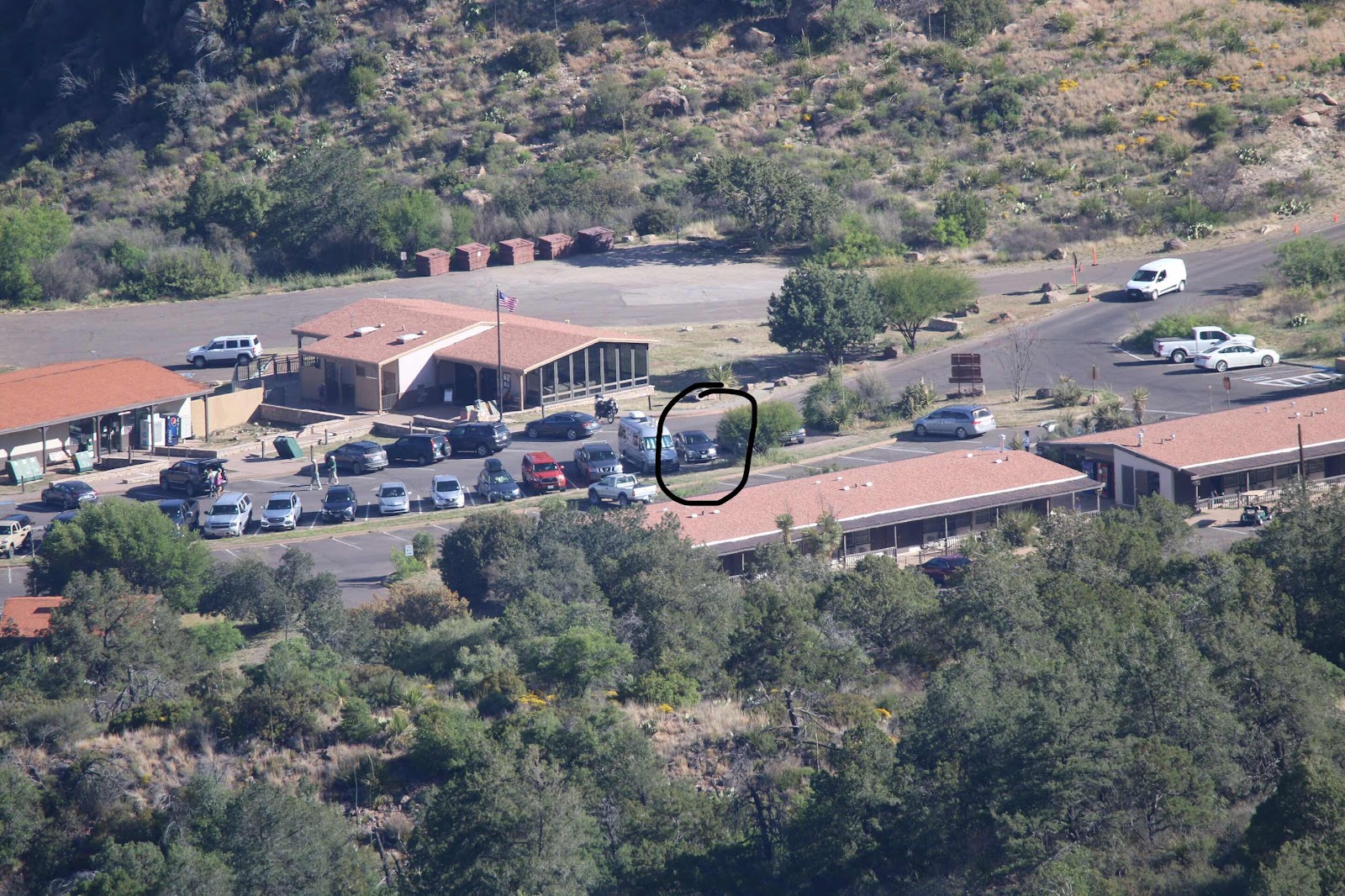
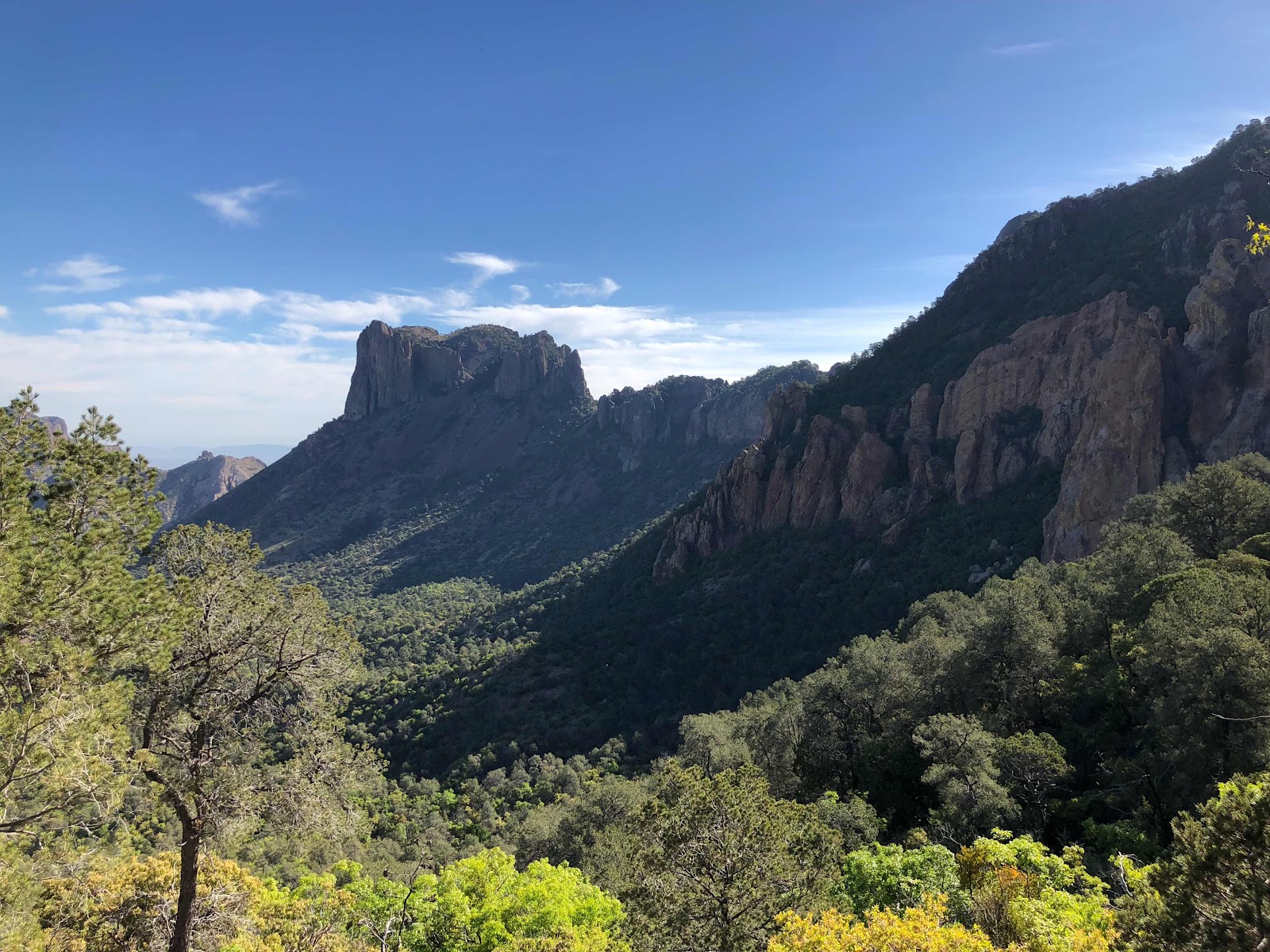
I arrived in the park about an hour before sunrise so was able to get on the trail up to the Colima Warbler by 7:15 and the 4 mile or so hike to the South Rim where you have your best chance at seeing the birds. It was not too hot or humid, so the hike was rather pleasant; but it is still 4 hours of rocky paths and switch backs and steps and stumbles along the way. I averaged about one mile per hour, stopping to bird along the way. When I did arrive at at the top, where the views are glorious as I remembered. At one point I could even see my rental car after nearly four hours of hiking.
I soon encountered 5 other birders and an SOB. I had never heard the term before, but the wife of the non-birder referred to her husband as such. We all needed an explanation. “Spouse of Birder.” A spouse that accompanies a birder but doesn’t bird and often complains about all the stopping to look at birds. I was once an SOB myself, as Sue was glad to point out after looking up the term on Google.
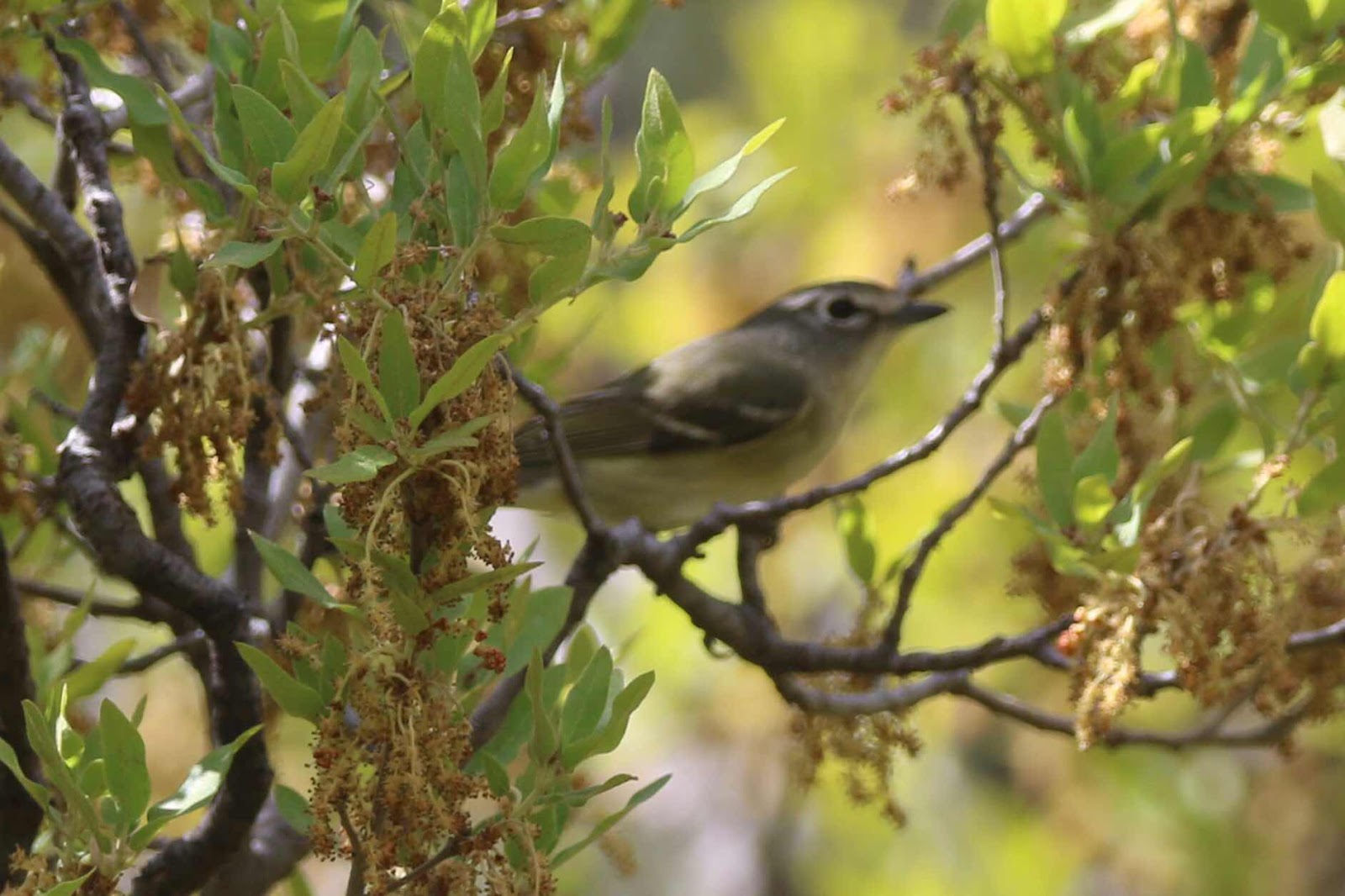
While searching for the Colima one of the other birders and I met started hearing a call, but it was not a Colima. When we did find it, it was a Cassin’s Vireo. I got a photo of the the bird for the first time, but it didn’t turn out as good as I would have liked.
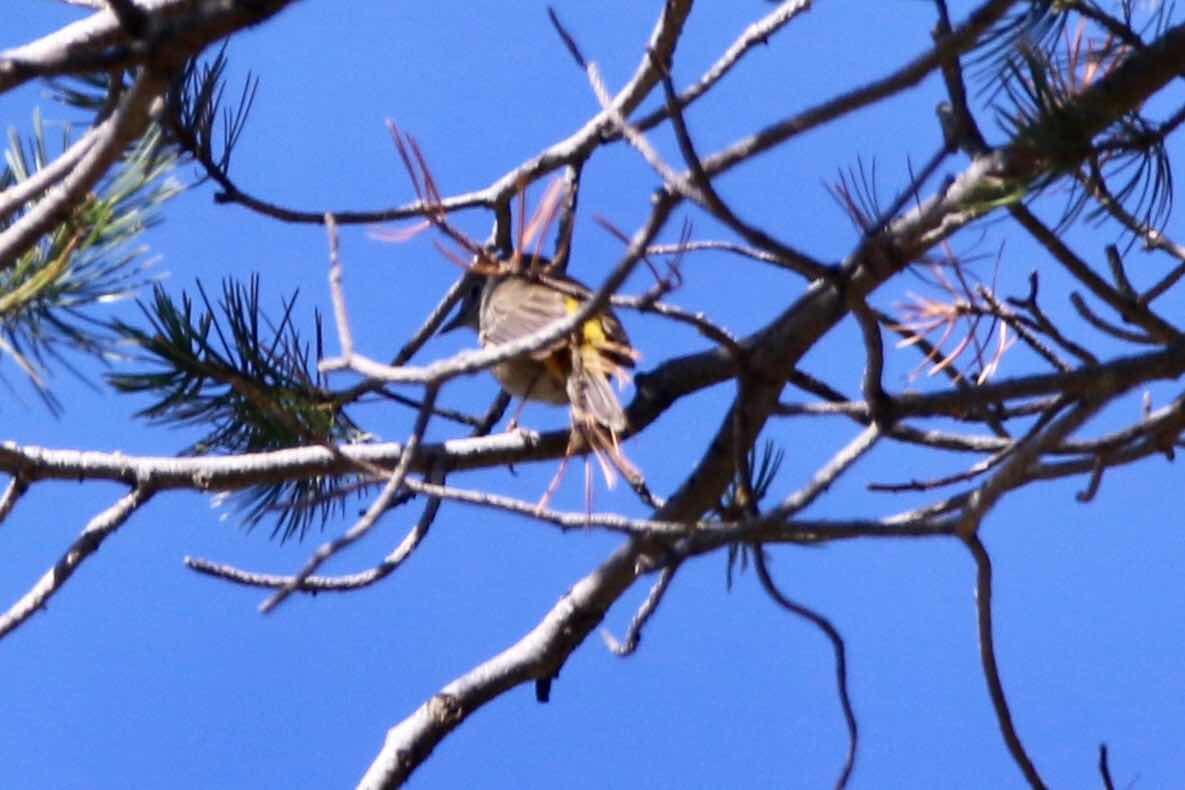
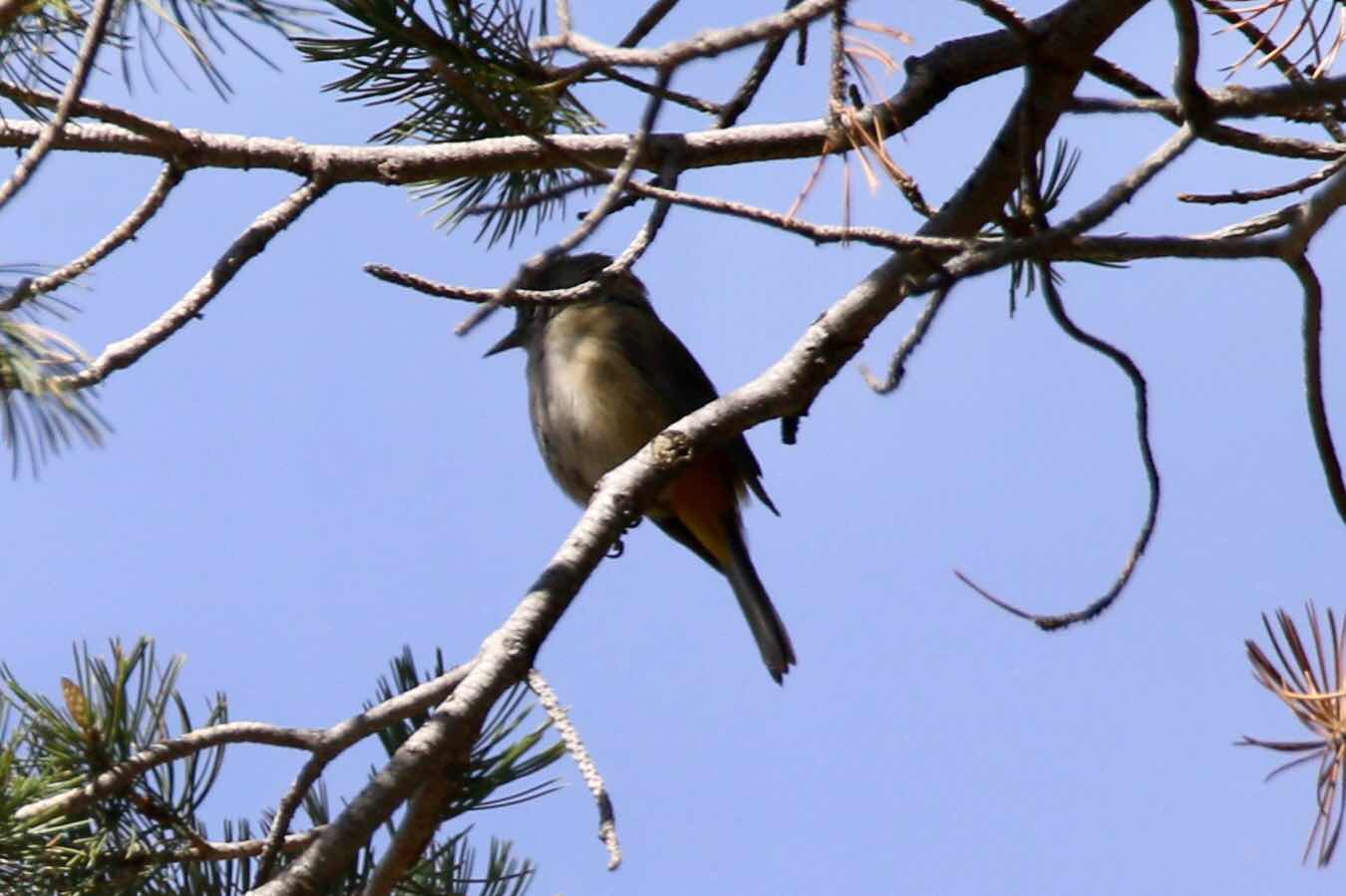
It did not take long to start hearing the Colimas calling and after a bit of looking, one of the other birders, just up the trail spotted one. We all got on it with great, though not close looks, and we were all thrilled for the Lifer. Last time I was here I did not get bird and walked the entire mountain. This time, once the bird was in hand and photos taken, I just turned around and went back down the way I came. About 4 hours up and 3 hours back down. All worth it for ABA species 678, almost five hours after I began the hike to Boot Canyon and the South Rim.
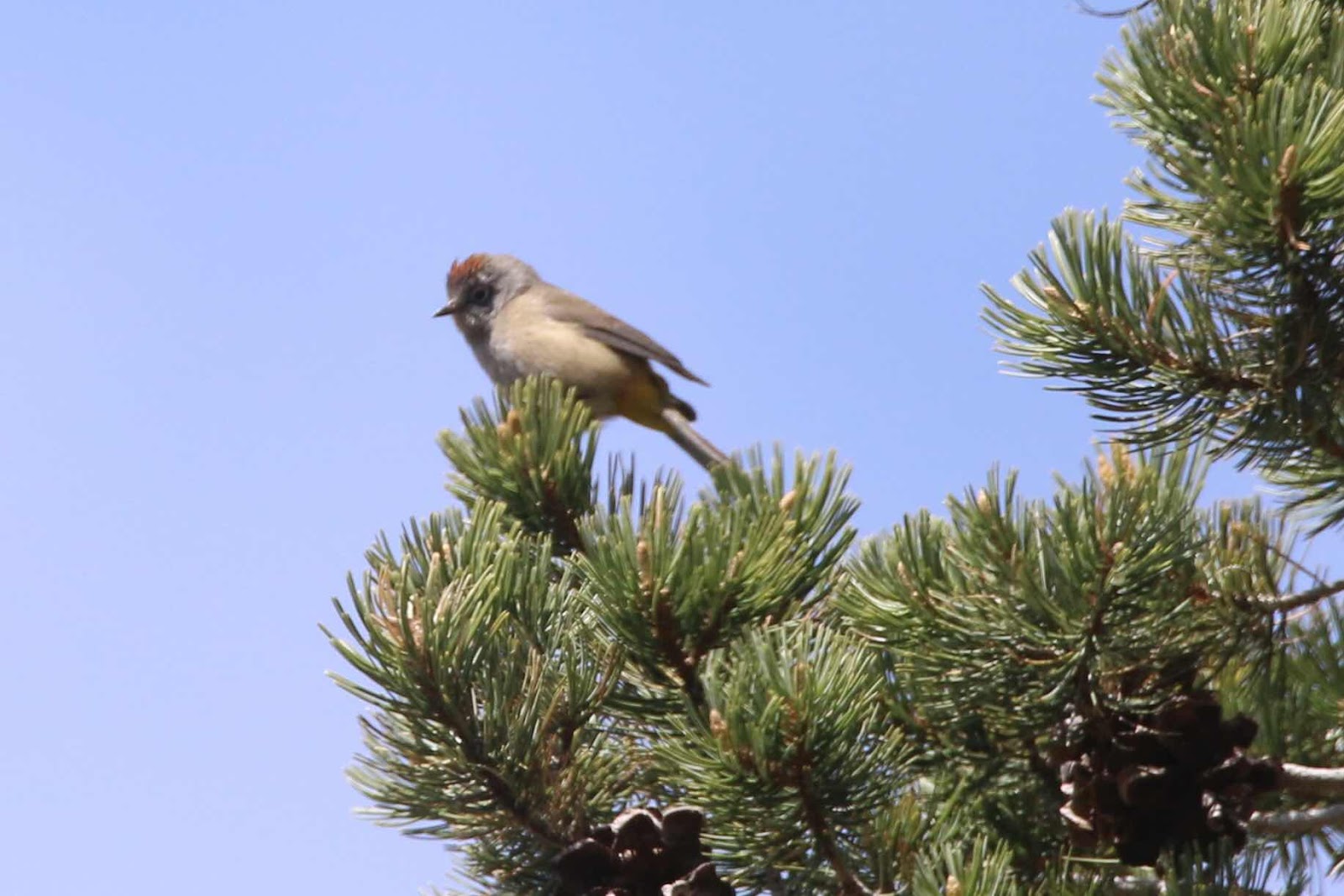 Rather than continuing on and coming down the other side of the mountain, I chose to just turn around and return the way I had come and made it down in about three and a half hours. In the parking lot I chased and found a Sage Thrasher. I only first saw one back in 2016 in New Mexico, but this one looked to be in bright breeding plumage, compared to the winter one I had previously seen.
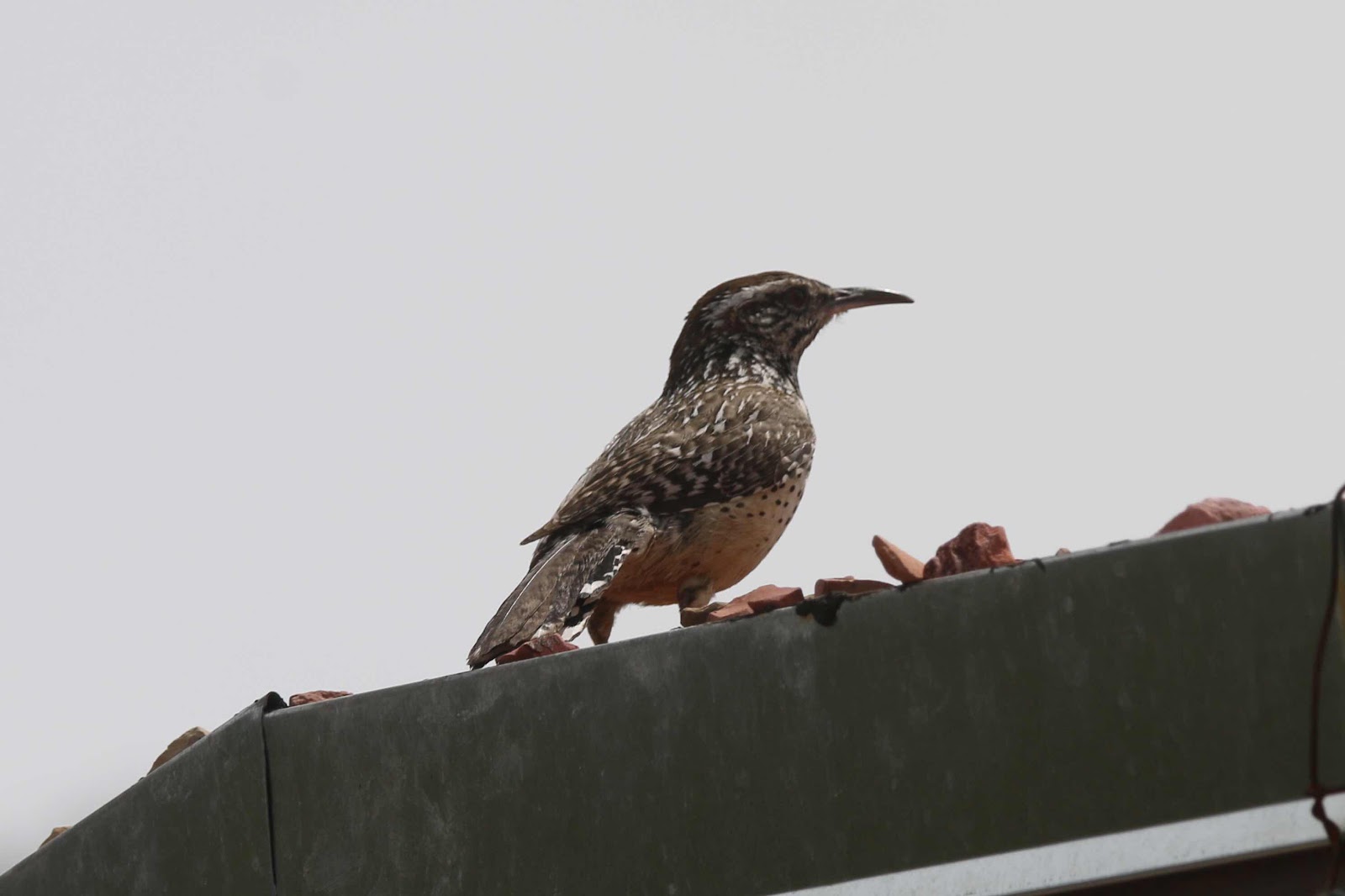
My next stop was the Rio Grande Valley, but I didn’t want to drive it all night, so I drove as far as McAllen, spent the night and was awake before dawn for the next stage of my mostly driving, birding trip. As I have discovered over the years, birding is often more about traveling to birding.
April 17-18, 2019 Quito Mazatlan WBC:
I arrived in The Valley around 2:30 in the afternoon after a very long drive, and went directly to the bird sanctuary in search of another Lifer, a female Crimson-collared Grosbeak. I stayed until 5:00pm, when they were closing for a wedding, but did not get the bird. Still, the place was hoping with plenty of species, and I enjoyed the afternoon adding to my Texas list. I was lucky that a hotel room was available right around the corner, so I went to bed early that night, and was up at dawn to begin the search anew the next morning.
Soon after I arrived, one of the staff told me he had heard the bird that morning, so the hunt was on. I was soon joined by a handful of other birders who had also come for the code 4 rarity and we all searched together, splitting up at times to cover more ground. Late in the morning 3 of the others had to leave, which was a shame because within a half hour those of us remaining began to hear the call of the grosbeak in question. Now it was a matter of finding it and the keen eye of one of my fellow birders got on the bird. We all got good binocular looks, but alas the photo was merely acceptable for identification purposes,(barely). Still, it was a code 4 Lifer and number 679 on my Life List, as I close in on 700.
My goal for the next day was not necessarily lifers, but the life experience of finally visiting High Island during Spring Migration. It was another long drive, so I only drove to within 2 hours of the “island” and stayed in Sugar Land, where I saw the RiffTrax Life presentation of Octaman. Great way to spend an evening after a long day of birding and driving.
April 19, 2019 High Island and One of My Favorite Days of Birding:
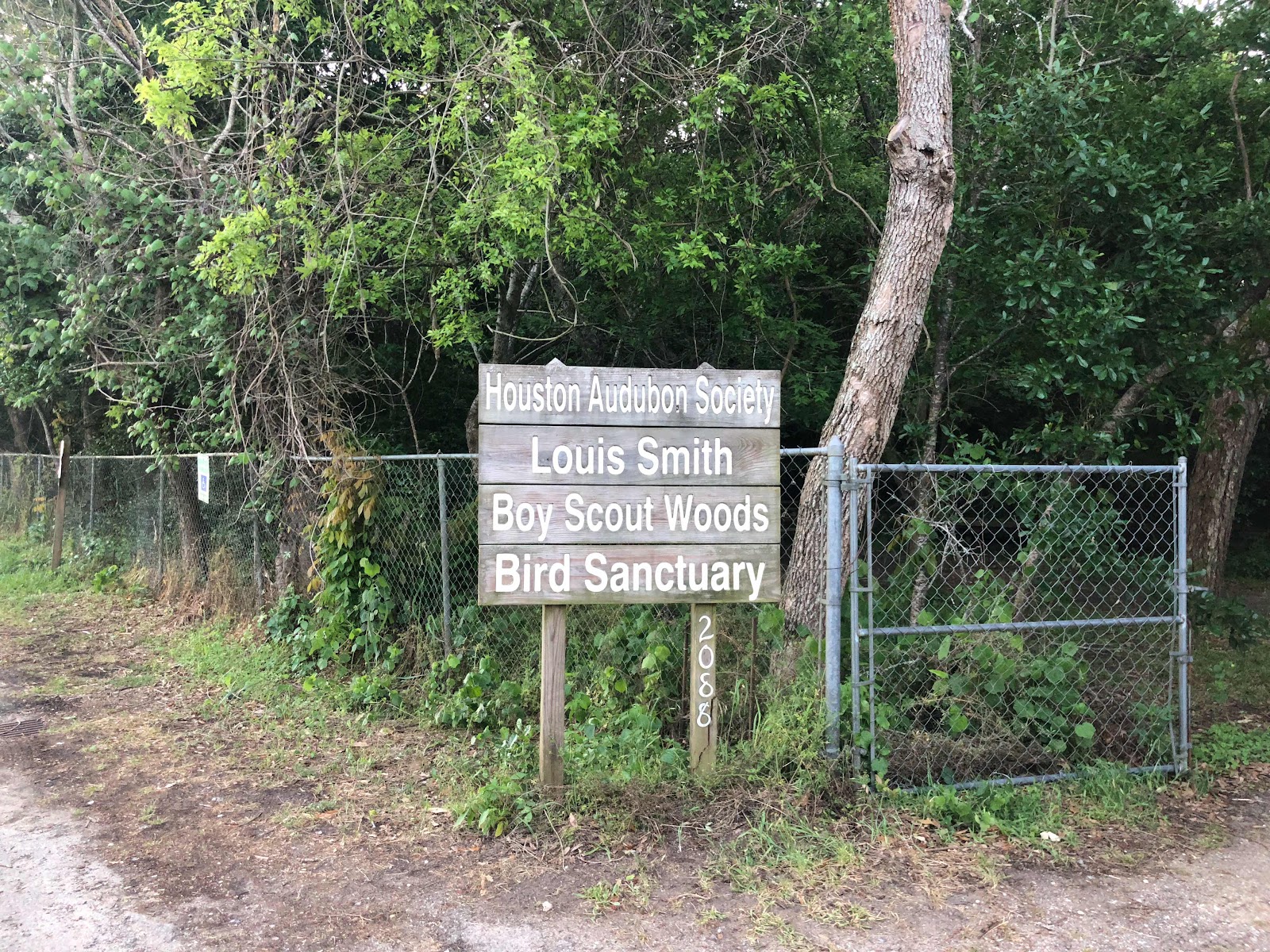
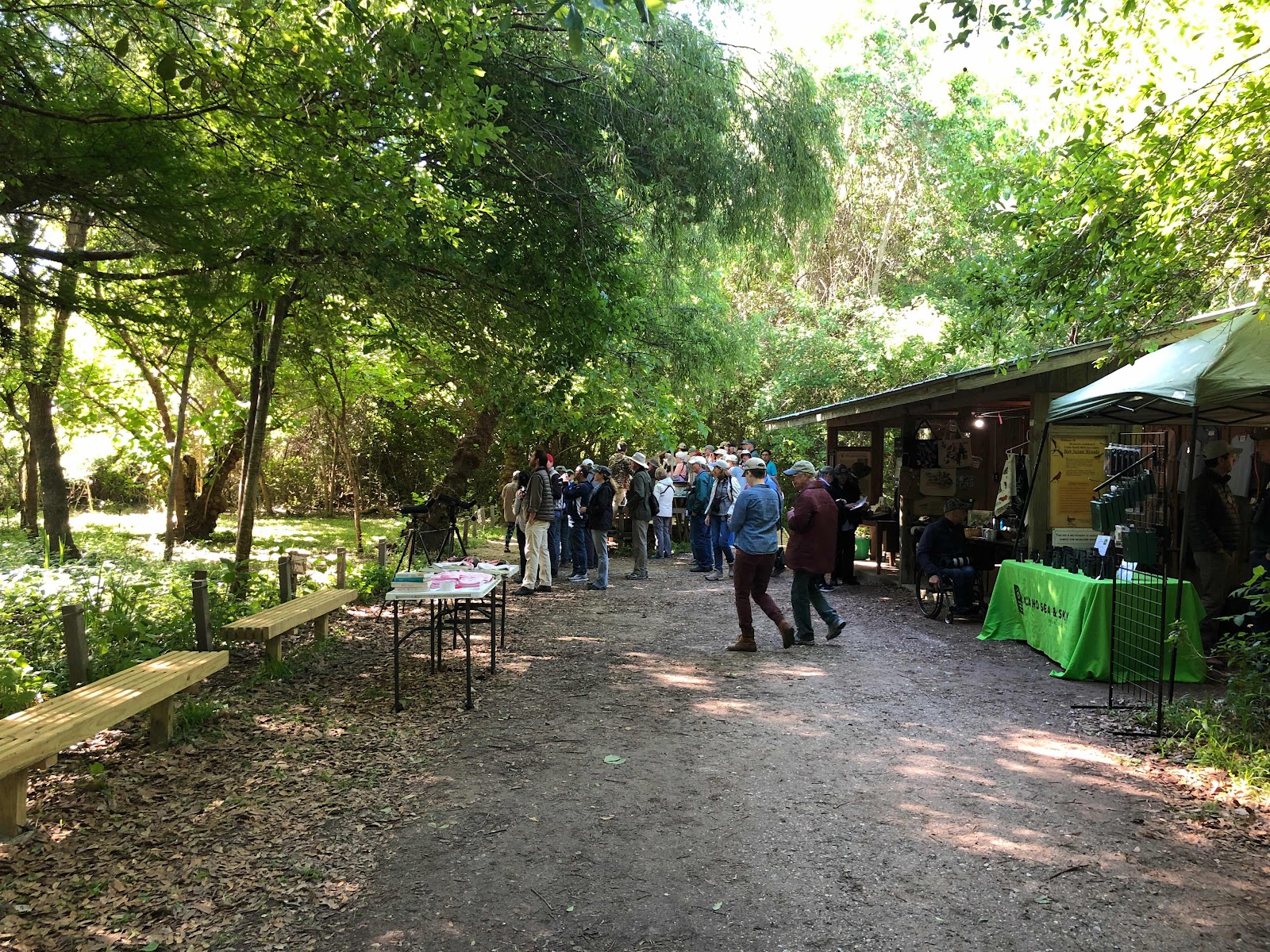
I arrived at the Boy Scout Woods just after sunrise, and even before much of the staff could set up and take my admission money, so I decided to walk the boardwalks until such time as they arrived and began a fantastic day of birding with the first of three Worm Eating Warblers I would see. Along the way I saw multiple Baltimore and Orchard Orioles and a mixed flock of Blue Grosbeaks and Indigo Buntings. Though I didn’t get to experience a fabled High Island Fallout, the weather was perfect for birding. The park was pretty much empty when I arrived...
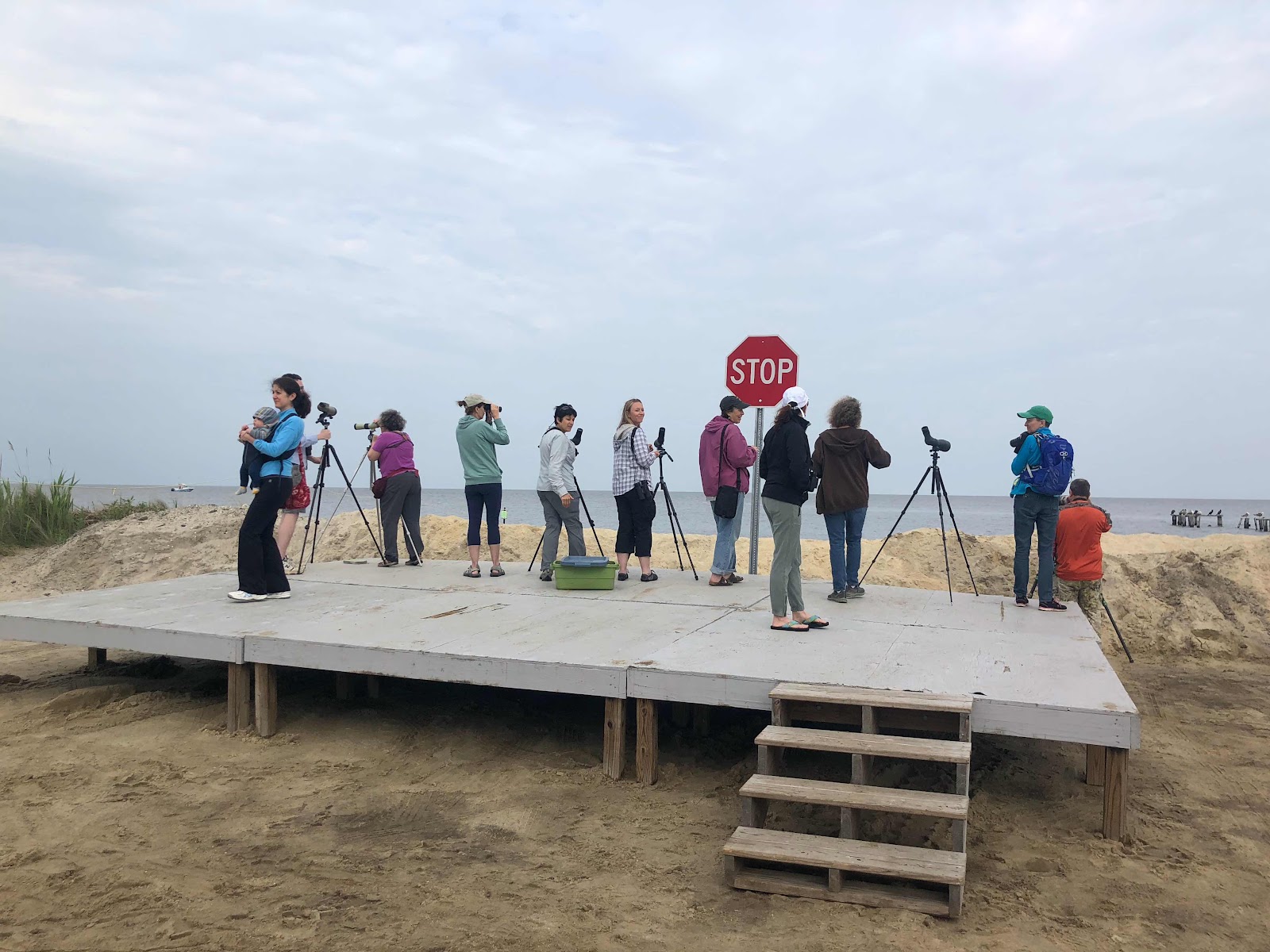
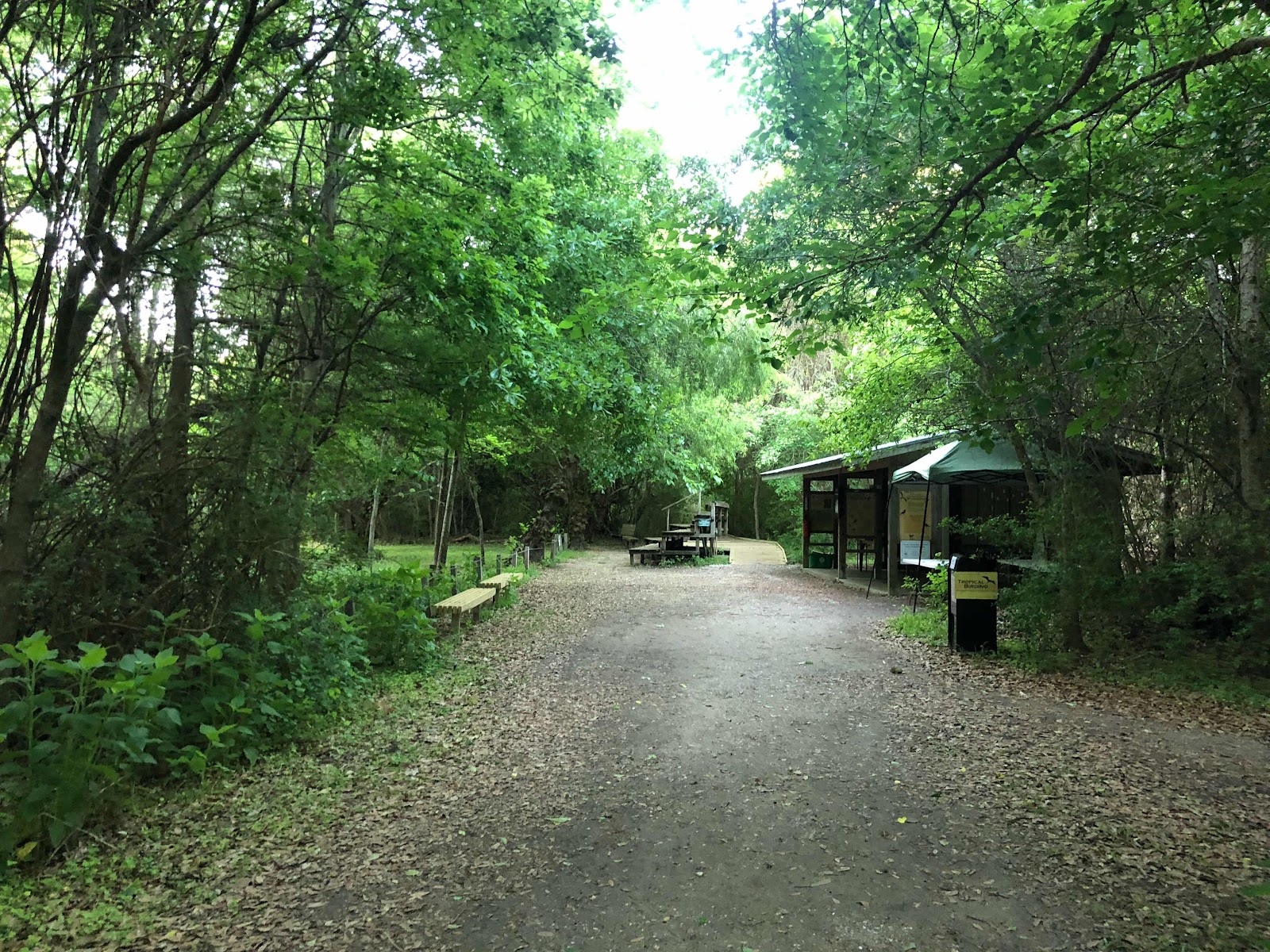 ...but when I returned to the bleachers, they were full of birders.
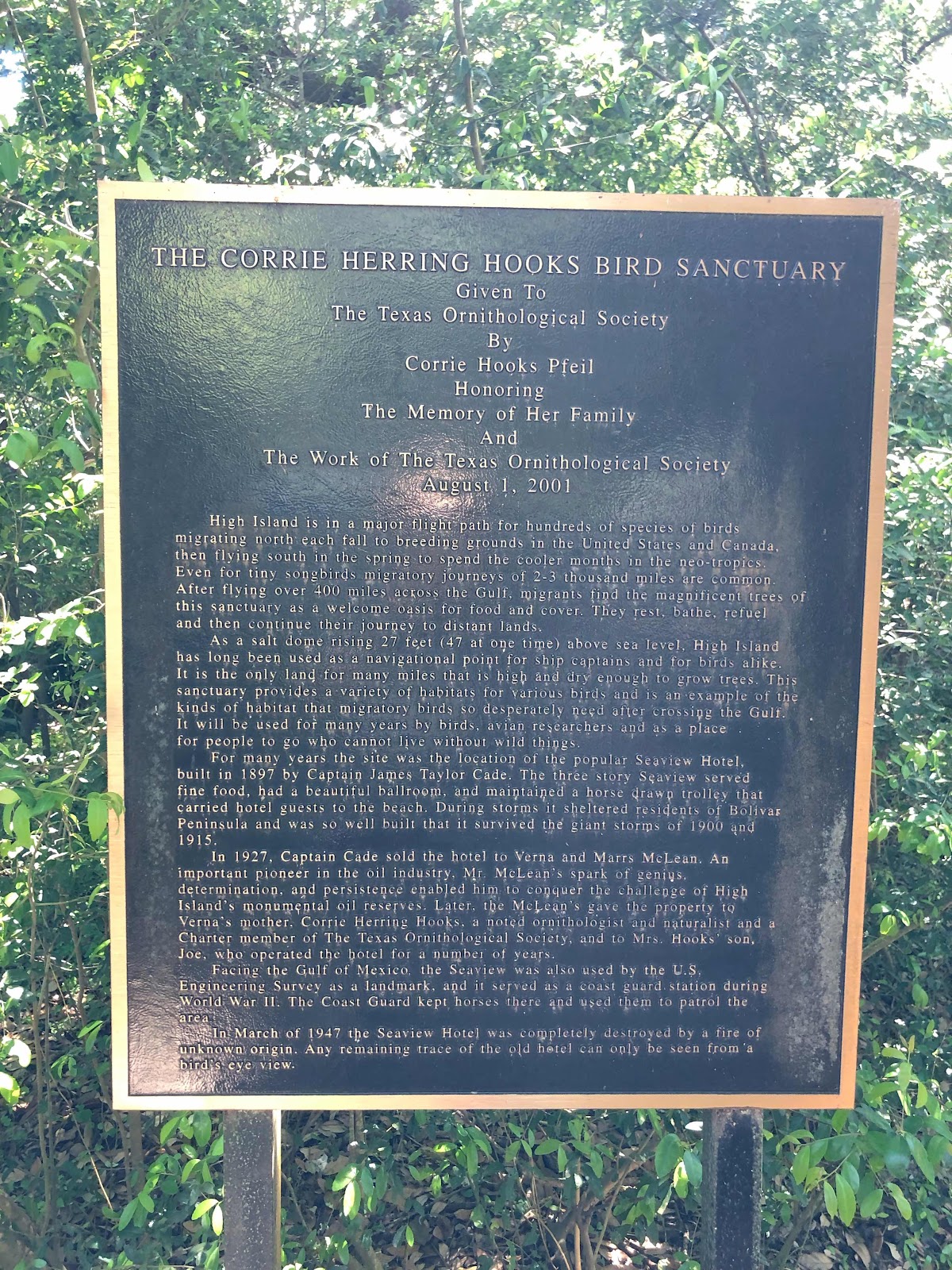
I made it to the kiosk where I paid, and found out that there is a reason High Island was given the name, since to all initial appearances it is neither high nor an island.
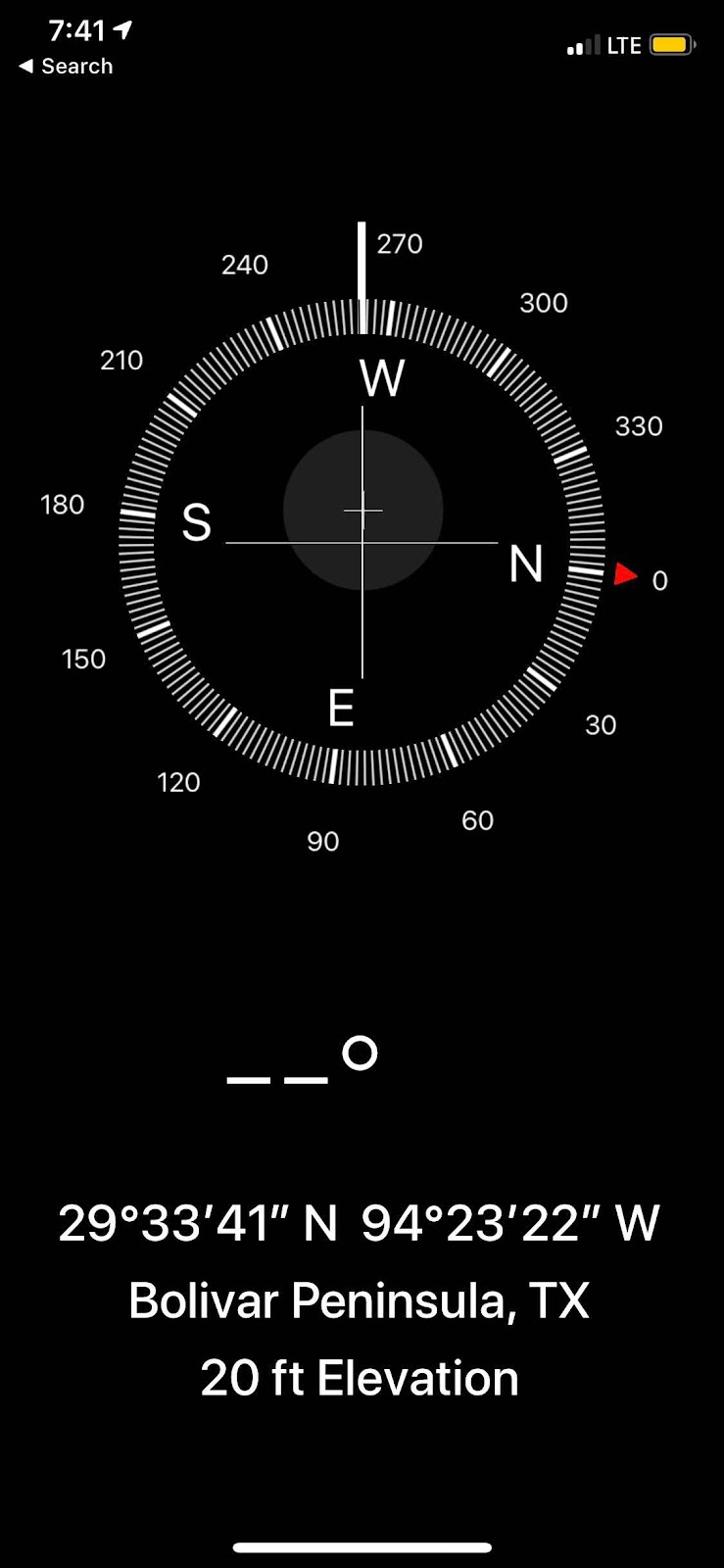 However, the 20 foot elevation is the highest point on the gulf coast, which is the first land migrating birds will see, thus the mythical fall outs, and during storms the south end of the peninsula can be under water, thus making it a true island.
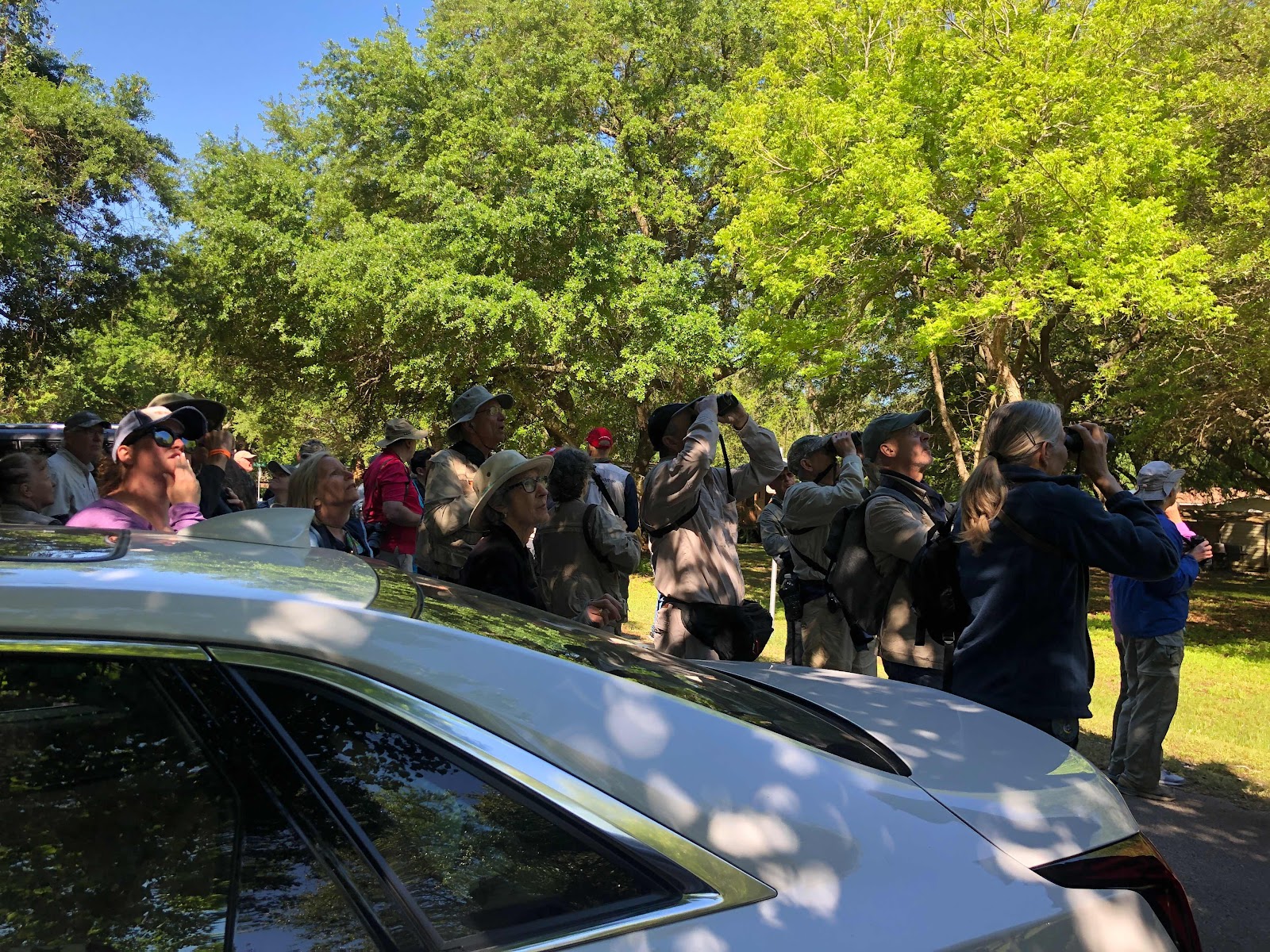
Once I was schooled on the ins and outs of the island I noticed that there was a bird hike going on and suddenly the guide was in a hurry to leave. He had received a text from another guide that there were lots of birds on First Street. A rushed caravan was formed and we headed around the corner and down the road to a tree lined street across from another birding spot, Hooks Woods Bird Sanctuary. I ended up spending several hours along the road and in the woods.
Right away we were spotting warblers and Tanagers. Lots and lots of female Summer Tanagers and a single female Scarlet Tanager. There was a lovely Prothonotary Warbler as well, but the highlight was the appearance of a Cerulean Warbler. Then another and maybe a third. That got the group excited, and there must have been 50 people along the road.
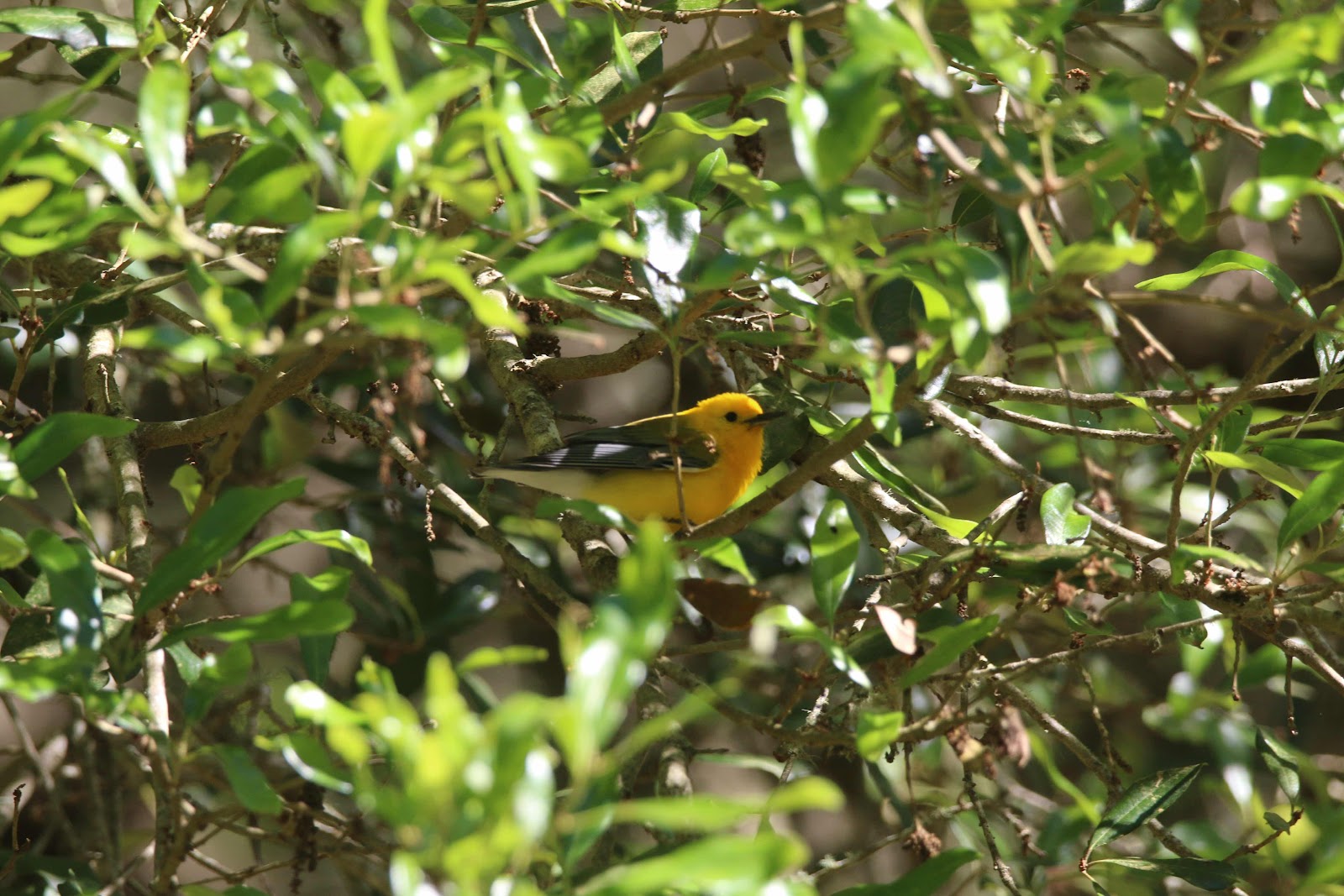
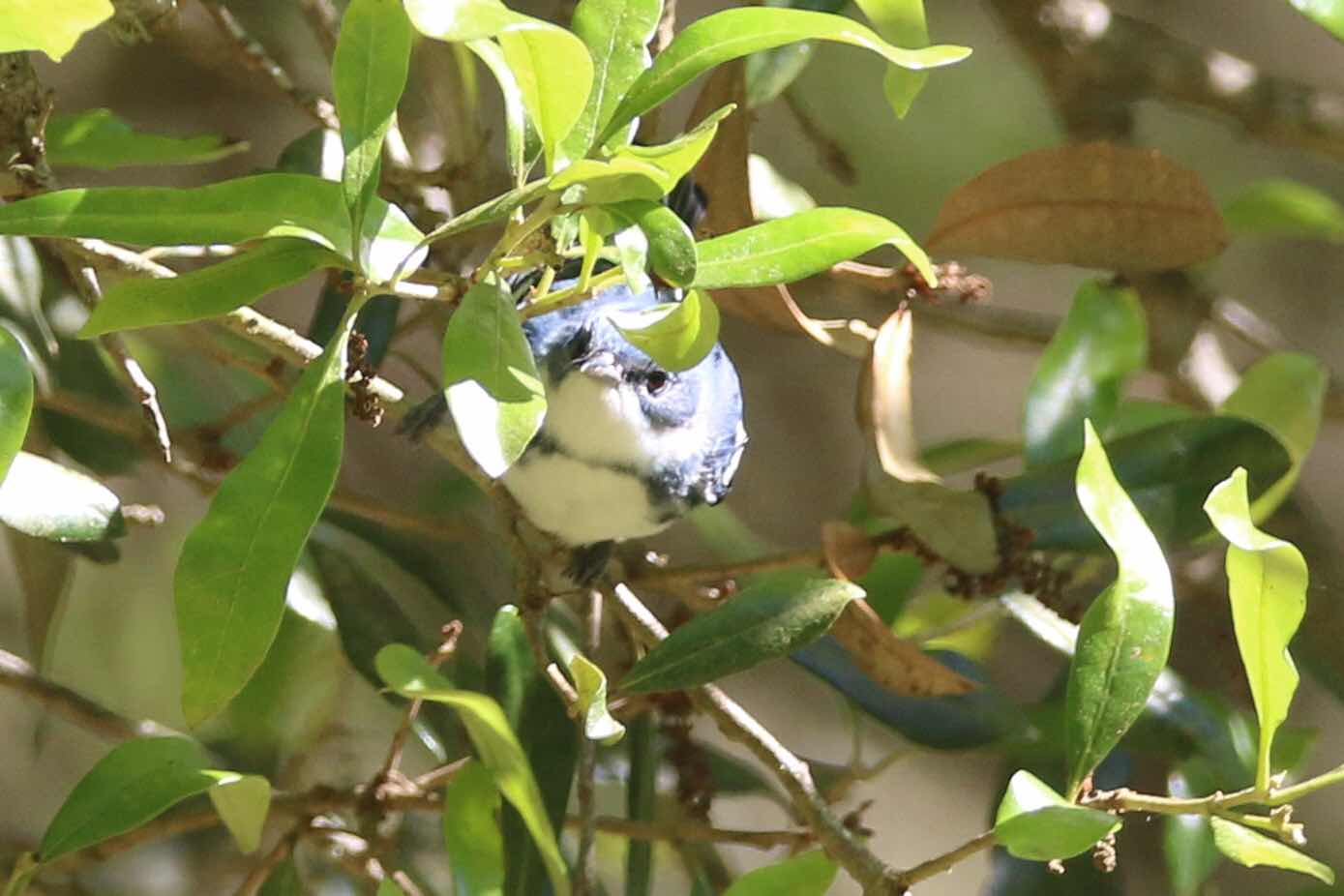
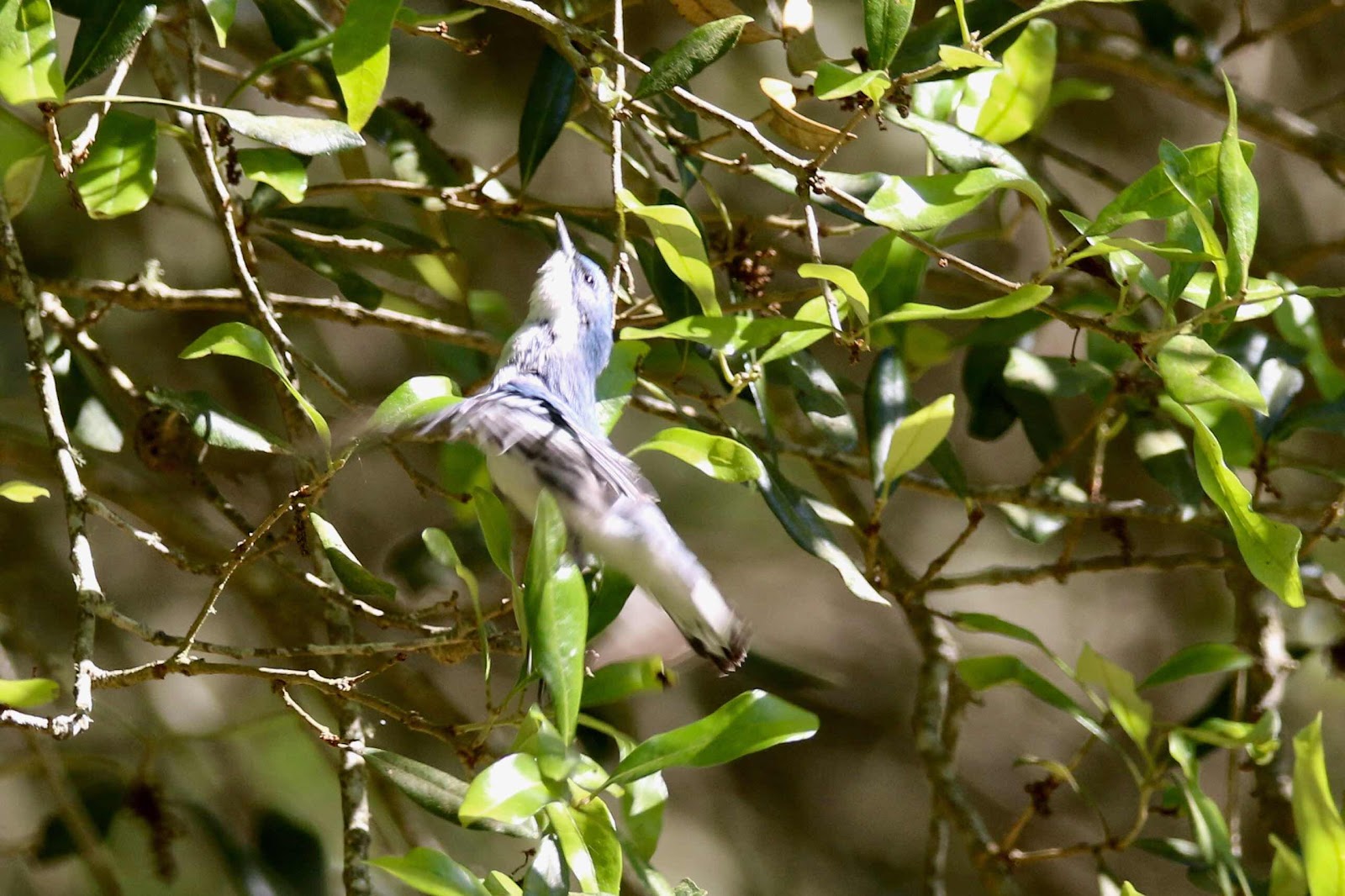 Then word of a Golden-winged Warbler in the woods spread quickly. Many of us went to the location with the guides and soon the Golden-winged was spotted. Afterwards I took a walk along the boardwalk. There are two spurs, each with a water drip at the end, just like at the bleachers, and there it was even better. In short order there appeared a White-eyed Vireo, Ovenbird, Louisiana and Northern Waterthrush, Swainson’s, Kentucky, Hooded and another Golden-winged. Back home it might take all of the month of May to see many of them, if they are seen at all. The Swainson’s is particularly rare back home on Ontario.
I also spent time at Rollover Pass, along the gulf coast, watching shorebirds, including a Piping Plover and Least Terns. It was way too windy, so I didn’t spend much time out there. I went back to both Boy Scout and Hook Woods, trying to get photos of the skulky warblers I couldn’t get in focus earlier, but with little success. I ended the day at Smith Oaks Sanctuary, where there is a beautiful rookery, home to nesting Great Egrets, Roseate Spoonbills and Neotropic Cormorants. I also saw my first male Scarlet Tanager of the day.
At that point I had to get on the road and head to Sealy so I could spend the morning before my flight at the Attwater Prairie Chicken Preserve.
April 20, 2019 Nemesis Bird:
Okay, I have been here several times before. Twice on my own and once with Sue. I had never been there in spring and since last week was the Prairie Chicken Festival, I though if I got there very early and drove the Wildlife Loop I might finally have a chance at seeing or at least hearing the bird make it’s booming call while looking for a mate. Twice I thought I had the bird, but the first one was a Crested Caracara and the second, a pair of Northern Bobwhites. Both nice birds, but no Prairie Chicken. I did enjoy many great close views of four migrating Upland Sandpipers, a bird that will continue on to the Calden Alvar in Ontario to nest. There were also more Savannah and Vesper Sparrows flitting around than I have probably seen in total since I became this wonderful, crazy adventure back in 2012.
I began this entry at 30,000 feet in flight and as I end it awaiting my flights home, I have just read an OntBirds Alert about two Black-bellied Whistling Ducks not far from Point Pelee National Park. If they stick around, I may chase them Wednesday afternoon. It’s only three hours away and compared to the nearly 2000 miles I have driven over the past six days from San Antonio to Big Bend; from Big Bend to the Rio Grande Valley of Texas, near Weslaco; then up to High Island, Attwater and finally back to the airport. A mere three hour trip is nothing compared too adding another Ontario Lifer, a bird I saw plenty of here in Texas.