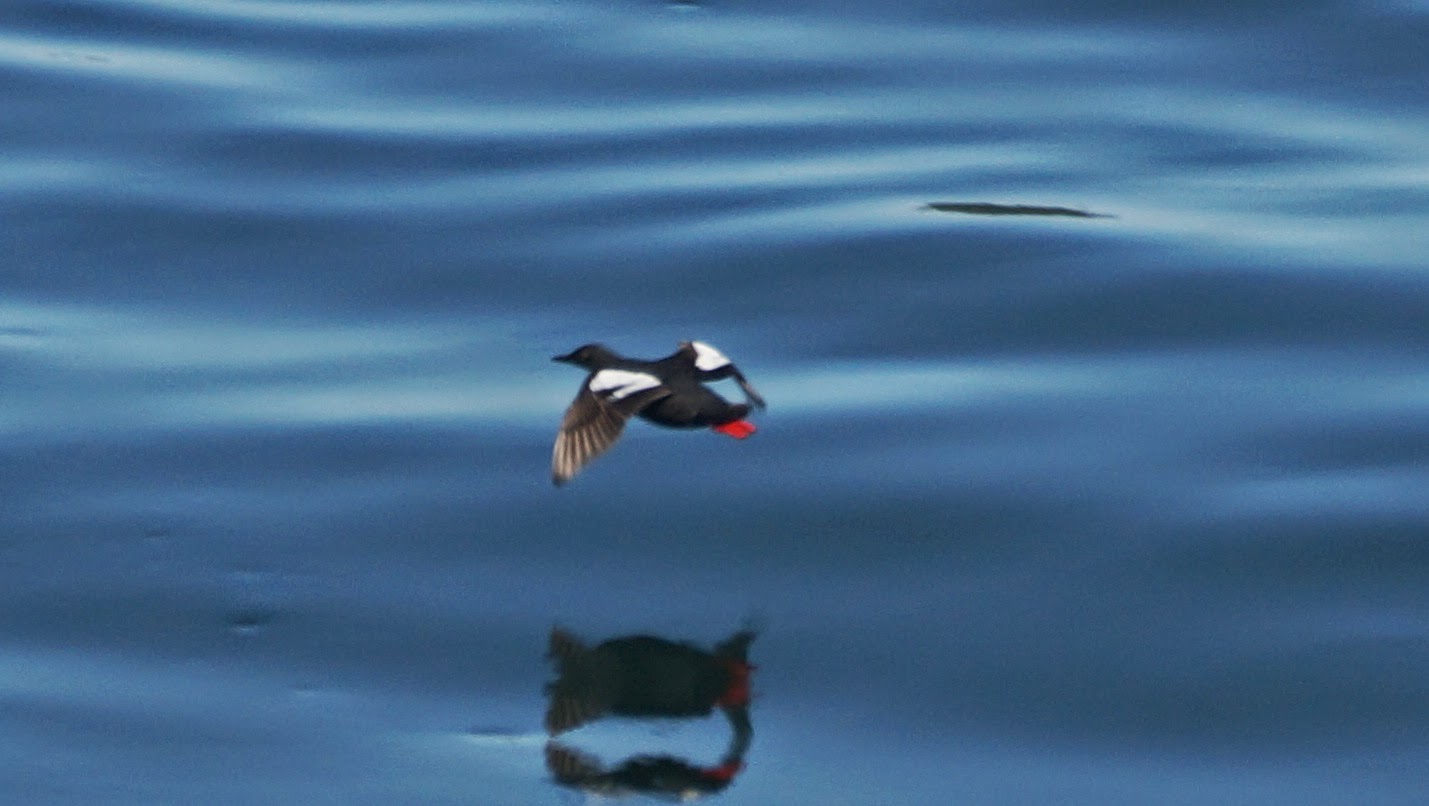
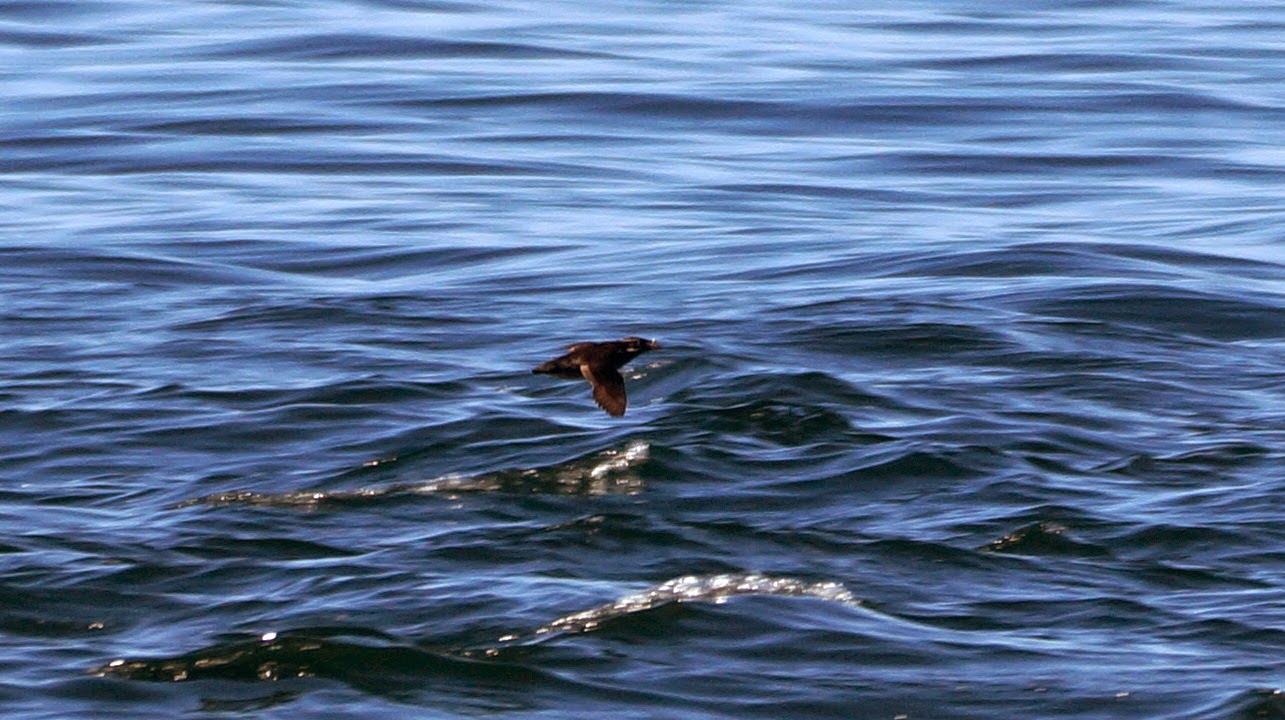
Here are some of the photos I did get:
My continuing adventure to see all the birds. Check out my 2012 Big Year at my2012bigyear.blogspot.com
Tuesday, 5 August 2014
Good Birds in Florida
Was nice to get some birding in on a recent trip to Florida and add enough birds to pass 500 species for the year, with the addition of 4 new species, Purple Swamphen, Monk Parakeet, Shiny Cowbird and 501: a Burrowing Owl I had missed on two other trips to Powerline Rd, north of Tampa. No photo of the owl, as it was on a post way out in a farmer's field and by the time I got the scope on it for a digiscoping shot, it flew off into the tall grass.
Here are some of the photos I did get:
Wednesday, 23 July 2014
The Dog Days of Birding
If you're not traveling a lot, birding in southern Ontario in the summer is not that exciting. Yes, there are lots of birds around, including Eastern Kingbirds, Cedar Waxwings, House Finches, but new and rare birds are few and far between. So when news of a Northern Bobwhite up in the Hamilton Mountains filtered through my e-mail in box, it was call for celebration, kind of.
I had to wait a couple of days, but when I did arrive at the designated spot, there were many birders, and a few chasers that I seem to run into at every rare bird alert, including a couple who's 6 month old baby has quite the life list already. It was pouring rain when I parked, so I hung out a bit and then decided to go get some lunch and return. And when I did, the sun was out and the Bobwhite was calling. It was, however being very gaurded about giving up its location. People came and went and eventually I got a glimps of the bird, but fumbled too long with my camera to get a photo. The one pictured below is a Bobwhite I saw last year.
And just today I was in James Gardens. Started with biking and ended with birding. As I was getting my binoculars out of the car I ran into Don Burton, who leads bird walks in James Gardens in spring and fall, and together we found a pair of Solitary Sandpipers, while looking for Spotted Sandpipers and Killdeer. Only my second new species for July, but that could change when I head down to Florida and try and chase down the Smooth-billed Ani in Miami.
Northern Bobwhite,(seen last year at Rouge Park):
I had to wait a couple of days, but when I did arrive at the designated spot, there were many birders, and a few chasers that I seem to run into at every rare bird alert, including a couple who's 6 month old baby has quite the life list already. It was pouring rain when I parked, so I hung out a bit and then decided to go get some lunch and return. And when I did, the sun was out and the Bobwhite was calling. It was, however being very gaurded about giving up its location. People came and went and eventually I got a glimps of the bird, but fumbled too long with my camera to get a photo. The one pictured below is a Bobwhite I saw last year.
And just today I was in James Gardens. Started with biking and ended with birding. As I was getting my binoculars out of the car I ran into Don Burton, who leads bird walks in James Gardens in spring and fall, and together we found a pair of Solitary Sandpipers, while looking for Spotted Sandpipers and Killdeer. Only my second new species for July, but that could change when I head down to Florida and try and chase down the Smooth-billed Ani in Miami.
Northern Bobwhite,(seen last year at Rouge Park):
Friday, 4 July 2014
Chasing Rarities is a Lark
I actually got Sue to join my on a crazy chase for a rare Ontario bird this past week. A Lark Bunting, normally seen in Arizona, where I had seen at least one back in 2012, showed up on Amhurst Island, nearly 3 hours east of, and a ferry ride away from, Toronto. It had been reported a few days before but it wasn't until this past Monday that we were able to get out there, both having a rare Monday off.
So off we drove to Prince Edward County, following directions on OntBirds, to the location of the Lark Bunting on Amherst Island. We arrived at the ferry docks just on time to drive on board for the short ride over to the island. While enroute I received an e-mail saying the bunting had just been seen around 10am, so we had high hopes it would be there when we arrived. It wasn't hard finding the location, as there were already some birders set up with their binoculars and cameras, but no bunting.
Sue enjoys birds as much as anyone, but she wasn't willing to hang out for hours waiting for it to appear. We did have a picnic lunch we could have had while waiting, but luckily within 20 minutes of our arrival, the western vagrant Lark Bunting landed on the guy wires of a tall antenna, gave everyone a great show and even sang a song very reminicent of a Cardinal.
Everyone was happy and we were off in search of a Snowy Owl that forgot it was supposed to head way north to the Canadian Arctic for the summer. After a few false starts and our picnic lunch by the water, we eventually stumbled upon the Snowy. Well, Sue stumbled up it. I was looking at Purple Martins off in the distance and Sue went down to the beach to take photos, when she found it on a rock outcropping hiding behind some vegitation. Cool find and just one of nearly a dozen Snowy Owls I've seen this year.
But we weren't quite done yet. On the drive home we stopped for dinner at the Lake on the Mountain, which litterally is a lake formed into a mountain top. It was on our way to a sighting, well hearing, of a Chuck-will's Widow. I've tried on several occasions to go out and listen for one, but came up empty each time. Hopefully this would be the night. We drove to Picton and up what seemed like a back alley way, called Hilltop Road. A narow gravel road surrounded by trees and bush. We were a bit early for the show, but spotted an American Woodcock just as dusk was settling in and even before dark Sue heard the first calls of the Chuck-will's Widow, which if you use your imagination a little does actually sound like its name. There were a lot of bugs, so Sue went and sat in the car and missed hearing the Whip-poor-will. The widow was a lifer for both of us. So it was worth the drive to Prince Edward County for sure, as I added three new birds for my year list and two new speicies for my Ontario Life List.
Some photos from Prince Edward, Col. Sam and a few leftovers from British Columbia:
So off we drove to Prince Edward County, following directions on OntBirds, to the location of the Lark Bunting on Amherst Island. We arrived at the ferry docks just on time to drive on board for the short ride over to the island. While enroute I received an e-mail saying the bunting had just been seen around 10am, so we had high hopes it would be there when we arrived. It wasn't hard finding the location, as there were already some birders set up with their binoculars and cameras, but no bunting.
Sue enjoys birds as much as anyone, but she wasn't willing to hang out for hours waiting for it to appear. We did have a picnic lunch we could have had while waiting, but luckily within 20 minutes of our arrival, the western vagrant Lark Bunting landed on the guy wires of a tall antenna, gave everyone a great show and even sang a song very reminicent of a Cardinal.
Everyone was happy and we were off in search of a Snowy Owl that forgot it was supposed to head way north to the Canadian Arctic for the summer. After a few false starts and our picnic lunch by the water, we eventually stumbled upon the Snowy. Well, Sue stumbled up it. I was looking at Purple Martins off in the distance and Sue went down to the beach to take photos, when she found it on a rock outcropping hiding behind some vegitation. Cool find and just one of nearly a dozen Snowy Owls I've seen this year.
But we weren't quite done yet. On the drive home we stopped for dinner at the Lake on the Mountain, which litterally is a lake formed into a mountain top. It was on our way to a sighting, well hearing, of a Chuck-will's Widow. I've tried on several occasions to go out and listen for one, but came up empty each time. Hopefully this would be the night. We drove to Picton and up what seemed like a back alley way, called Hilltop Road. A narow gravel road surrounded by trees and bush. We were a bit early for the show, but spotted an American Woodcock just as dusk was settling in and even before dark Sue heard the first calls of the Chuck-will's Widow, which if you use your imagination a little does actually sound like its name. There were a lot of bugs, so Sue went and sat in the car and missed hearing the Whip-poor-will. The widow was a lifer for both of us. So it was worth the drive to Prince Edward County for sure, as I added three new birds for my year list and two new speicies for my Ontario Life List.
Some photos from Prince Edward, Col. Sam and a few leftovers from British Columbia:
Spending its summers in the midwest, the Lark Bunting is a rare visitor to Southern Ontario:
A winter resident of Southern Ontario, this Snowy Owl decided to spend the summer:
Anna's Hummingbird, Barred Owl and Bushtit, right where they should be in Vancouver, BC:
Here at Home, a baby Bank Swallow:
Indigo Bunting, Curry Tract, Campbellville:
Wednesday, 25 June 2014
Gone West
Well, I am returned from my annual trip to Vancouver, once again without a photo of an American Dipper, but that was just fine, as I decided I was finally going to take the ferry over to Victoria, BC,(actually, Sidney), and look for the Sky Lark that seems to enjoy summering in the fields at the back end of the Victoria International Airport. In 2012 it showed up too late in the year for me to go after it, and last year I had already made plans to go up to Squamish and look for American Dippers, when I learned that the Sky Lark had returned. This year I was not going to miss it, so as soon as I saw on e-bird that it had returned to the airport, I made plans to arrive a day early for my work trip and chase this somewhat rare bird.
Upon disembarking from the ferry I drove straight to the e-bird coordinates of the Sky Lark and again was rewarded with a quick find. I heard the bird before I saw it, after playing its call on my iphone. The recording actually attracted Song Sparrows to the fence, but eventually the Sky Lark showed itself in flight and eventually landed near me on the other side of the fence. It was Lifer number 621, but I wasn't done yet. I headed over to Prospect Pond where a Black Swift had been reported and as I approached the lake at the end of a road, down a hill, what do you know, the swift was flying around above the lake and stayed until a Bald Eagle landed in a tree close by. The guy fishing there told me the eagle comes every day to try and eat the fish he catches and releases. It also scares off Black Swifts.
I spent the rest of my free time in BC birding in and around Victoria and Vancouver and added 20 new species to my year list, including Pigeon Guillemot, Black Oyster Catcher, Rhinoceros Auklet, and Bullock's Oriole, of which I got my first photograph. My list for The Americas, now stands at 492 for the year.
From Florida:
Black-necked Stilt:
Eastern Towhee: |
Royal Tern:
From British Columbia:
Black Swift:
Brandt's Cormorant:
Bullock's Oriole:
Bushtit:
Heerman's Gull,(rare for Victoria,BC):
Pelagic Cormorant:
Pigeon Guillemot:
Rhinoceros Auklet:
Sky Lark:
Violet-green Swallow:
Black Oystercatcher, eating an oyster:
Friday, 6 June 2014
A Few New Birds
June in Ontario is a slow month for birding, as migration has ended and few new birds show up. However, I did miss a couple of warblers during the height of Migration, and was able to go to a few new birding spots this year, thanks to recommendations from other birders.
Acadian Flycatcher
Clay-colored Sparrow
Acadian Flycatcher
Great-crested Flycatcher
Cerulean Warbler
The first was a place called Cawthra Mulock Nature Reserve just south of Barrie, where Mourning Warblers nest. I didn't get to see one of these reclusive birds there, but did hear 3 individuals calling as I walked the mosquito infested trails. The second new spot was a place called Skunk's Misery, and again the misery was mosquitos in even greater numbers. In this nature preserve near Newbury, I was looking for recently seen Cerulean Warblers and Acadian Flycathers that nest in the area. I stuck out on the Cerulean, but did watch a Yellow-billed Cuckoo fly by and then found the calling, and posing for photographs, Acadian Flycatcher. I finally got photos of a bird I have mostly only hear over the past two-plus years and only at Happy Valley.
My next trip was a return for the first time since 2012 to Carden Alvar, an important area in Ontario, where many birds find nesting grounds, including the Eastern Loggerhead Shike, Upland Sandpiper and Golden-winged Warbler. I had hoped to finally get photos of the Golden-winged and add Upland Sandpiper to my year list. I saw the Uplander as I drove toward Wylie Rd and heard the Golden-winged along Wylie Rd, but did not see one. I also missed the Loggerhead Shrikes, which would have been an Ontario Lifer. I did hear several Sedge Wrens, and they I were number 272 for my Ontario Life List.
And the other day I went out for one last search for Cerulean Warblers, the one Wood Warbler that can been seen in Ontario that I haven't seen in 2014. The destination was Backus Woods, in Norfolk County, just north of Longpoint Provincial Park. According to e-bird and Jody, who was organizing an OFO tour for the following weekend, I'd hear and perhaps see the Ceruleans along the Wetlands Trail. There are two entrances and I took the one the furthest from where the Cerulean reports came from. So for nearly two hours I walked with only a Rose-breasted Grosbeak for my time. Eventually, though, as I was returning to the main path, I started hearing the Cerulean calls and within minutes I found one and had it land close enough for a few photos. I even got a bonus look at a Hooded Warbler before heading out.
Acadian Flycatcher
Clay-colored Sparrow
Great-crested Flycatcher
Cerulean Warbler
Wednesday, 4 June 2014
2014 Spring Migration, Part 4: Whimbrels Bring Up the Rear
One of the highlights of spring migration in Toronto is the Whimbrel Watch at Col. Sam Smith Park in the west end of the city along the lake. Every year from mid May until the end of the month, Whimbrels take off from their staging grounds in Virginia and fly through the night, passing over the aptly named Whimbrel Point, at the south end of the park. How they knew to cross right by Whimbrel Point is a mystery only the birding gods know the secret of. For two weeks hundreds of birders drop by the point to watch thousands of Whimbrels migrate to their nesting grounds in Arctic Canada and Alaska.
My first visit resulted in no Whimbrels to watch and my second I saw one fly by at a reasonably close distance, but the third time really was the charm as I discovered, along with Jean Iron, who loves to watch Whimbrels, a flock of 14 Whimbrels sitting on the rocks just north of the point. A few of us hung out and watched them for a while and got great photos.
This is also a good time of year for other shore birds and I spent a morning at two great spots just outside Toronto, Reesor's Pond, which is not really a pond, and Nonquon Sewage Lagoons, which is really a sewage lagoon. At Reesor's, along with local birder, Stan Long, I had nice looks at Semipalmated Plovers and Sandpipers, along with lots of Dunlin, which are much prettier in the spring up north than the boring gray they are down in Florida in the winter and early spring.
At Nonquon I was able to watch dozens of Black Terns flying in and around the retention ponds, and with the help of another birder, whom I've met before but don't know the name of, I was able to locate a Wilson's Phalarope and White-rumped Sandpipers. I finished off the morning at Thickson's Woods, where another nice birder, who's name I didn't bother to ask, alterted me to the presence of a Gray-cheeked Thrush, which I found hanging out along the main path. Also found yet another Canada Warbler, having now seen over a dozen of them this year, including another at Tommy Thompson Park just the other day.
Yesterday, thanks to a tip from another birder I met a couple of weeks ago at Col. Sam, Ron Flemming, I went to a new park, Cawthra Mulock Nature Reserve, where I was promised Mourning Warblers. Along with Cerulean, the Mourning Warbler is the only regularly migrating warbler I have missed this year. Mourning Warblers are notoroiously difficult to see, and this was the case yesterday. I heard at least three individuals over my 2 hour walk, but never really saw one.
I did, however, see and hear the bzzzzz-bzzz of a Clay-colored Sparrow and got great photos. Migration is pretty much at its tail end, but I did enjoy a walk in Col. Sam this morning where I heard and photographed a Blackpoll Warlber, along with a nice Black-crowned Night Heron.
Subscribe to:
Posts (Atom)